- Your cart is empty
- Continue Shopping

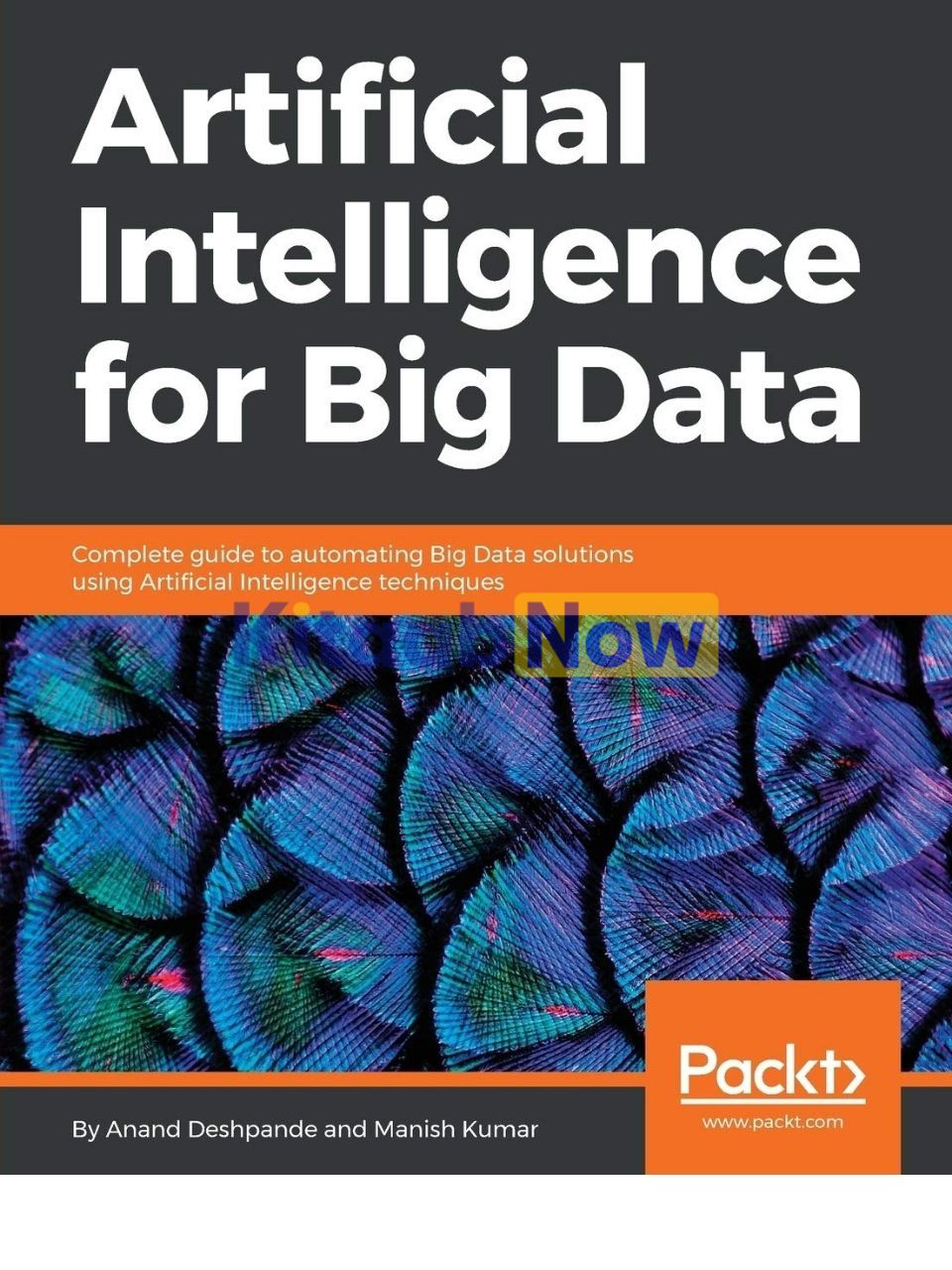
Artificial Intelligence for Big Data: Complete guide to automating Big Data solutions using Artificial Intelligence techniques
44% off
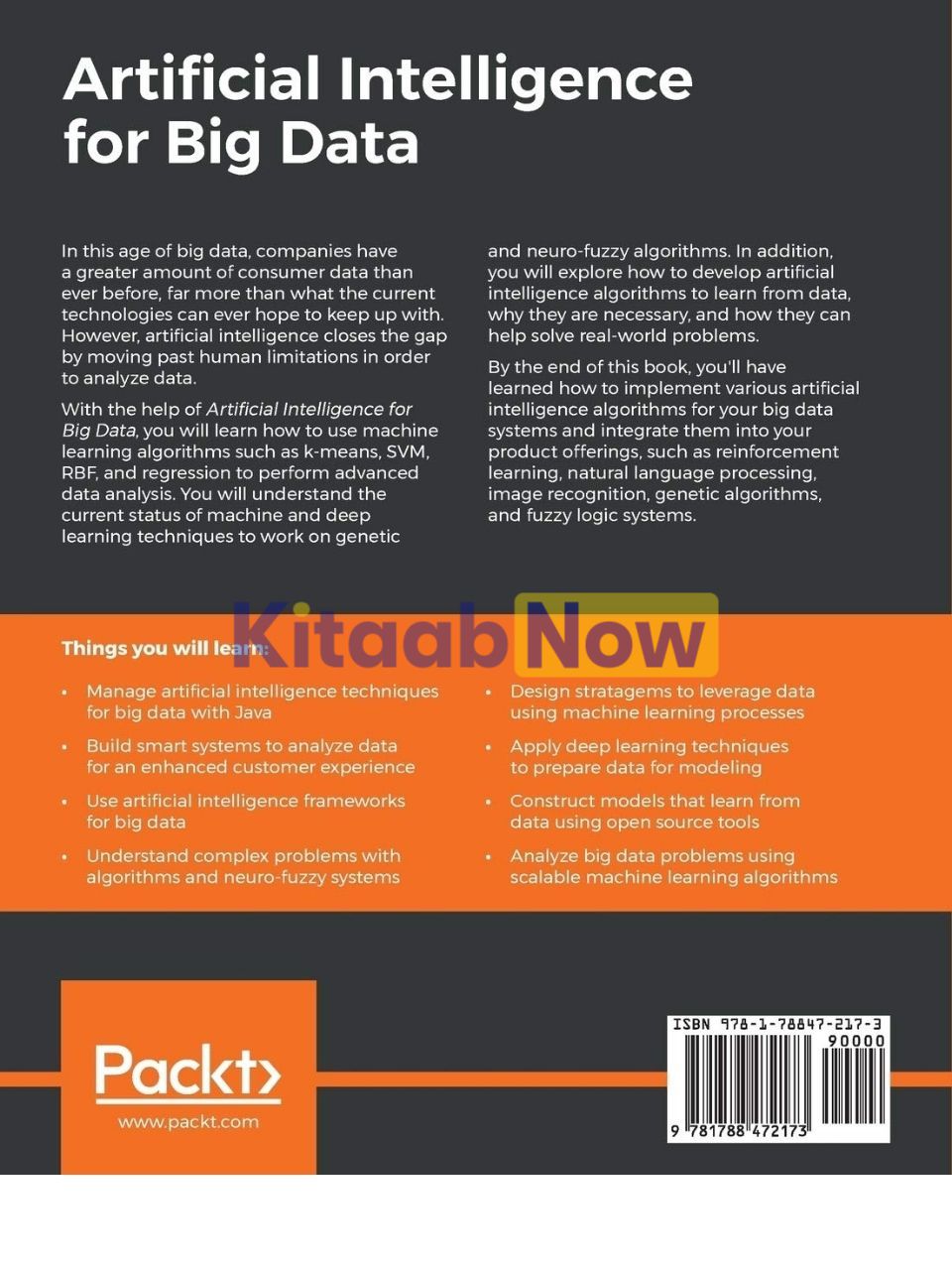
DescriptionBuild next-generation Artificial Intelligence systems with JavaKey FeaturesImplement AI techniques to build smart applications using Deeplearning4jPerform big data analytics to derive quality insights using Spark MLlibCreate self-learning systems using neural networks, NLP, and reinforcement learningWho This Book Is ForThis book is for you if you are a data scientist, big data professional, or novice who has basic knowledge of big data and wish to get proficiency in Artificial Intelligence techniques for big data. Some competence in mathematics is an added advantage in the field of elementary linear algebra and calculus.What You Will LearnManage Artificial Intelligence techniques for big data with JavaBuild smart systems to analyze data for enhanced customer experienceLearn to use Artificial Intelligence frameworks for big dataUnderstand complex problems with algorithms and Neuro-Fuzzy systemsDesign stratagems to leverage data using Machine Learning processApply Deep Learning techniques to prepare data for modelingConstruct models that learn from data using open source toolsAnalyze big data problems using scalable Machine Learning algorithmsIn DetailIn this age of big data, companies have larger amount of consumer data than ever before, far more than what the current technologies can ever hope to keep up with. However, Artificial Intelligence closes the gap by moving past human limitations in order to analyze data.With the help of Artificial Intelligence for big data, you will learn to use Machine Learning algorithms such as k-means, SVM, RBF, and regression to perform advanced data analysis. You will understand the current status of Machine and Deep Learning techniques to work on Genetic and Neuro-Fuzzy algorithms. In addition, you will explore how to develop Artificial Intelligence algorithms to learn from data, why they are necessary, and how they can help solve real-world problems.By the end of this book, you’ll have learned how to implement various Artificial Intelligence algorithms for your big data systems and integrate them into your product offerings such as reinforcement learning, natural language processing, image recognition, genetic algorithms, and fuzzy logic systems.Style and approachAn easy-to-follow, step-by-step guide to help you get to grips with real-world applications of Artificial Intelligence for big data using JavaTable of Contents Title PageCopyright and CreditsArtificial Intelligence for Big DataPackt UpsellWhy subscribe?PacktPub.comContributorsAbout the authorsAbout the reviewersPackt is searching for authors like youPrefaceWho this book is forWhat this book coversTo get the most out of this bookDownload the example code filesDownload the color imagesConventions usedGet in touchReviewsBig Data and Artificial Intelligence SystemsResults pyramidWhat the human brain does bestSensory inputStorageProcessing powerLow energy consumptionWhat the electronic brain does bestSpeed information storageProcessing by brute forceBest of both worldsBig DataEvolution from dumb to intelligent machinesIntelligenceTypes of intelligenceIntelligence tasks classificationBig data frameworksBatch processingReal-time processingIntelligent applications with Big DataAreas of AIFrequently asked questionsSummaryOntology for Big DataHuman brain and OntologyOntology of information scienceOntology propertiesAdvantages of OntologiesComponents of OntologiesThe role Ontology plays in Big DataOntology alignmentGoals of Ontology in big dataChallenges with Ontology in Big DataRDF—the universal data formatRDF containersRDF classesRDF propertiesRDF attributesUsing OWL, the Web Ontology LanguageSPARQL query languageGeneric structure of an SPARQL queryAdditional SPARQL featuresBuilding intelligent machines with OntologiesOntology learningOntology learning processFrequently asked questionsSummaryLearning from Big DataSupervised and unsupervised machine learningThe Spark programming modelThe Spark MLlib libraryThe transformer functionThe estimator algorithmPipelineRegression analysisLinear regressionLeast square methodGeneralized linear modelLogistic regression classification techniqueLogistic regression with SparkPolynomial regressionStepwise regressionForward selectionBackward eliminationRidge regressionLASSO regressionData clusteringThe K-means algorithmK-means implementation with Spark MLData dimensionality reductionSingular value decompositionMatrix theory and linear algebra overviewThe important properties of singular value decompositionSVD with Spark MLThe principal component analysis methodThe PCA algorithm using SVDImplementing SVD with Spark MLContent-based recommendation systemsFrequently asked questionsSummaryNeural Network for Big DataFundamentals of neural networks and artificial neural networksPerceptron and linear modelsComponent notations of the neural networkMathematical representation of the simple perceptron modelActivation functionsSigmoid functionTanh functionReLuNonlinearities modelFeed-forward neural networksGradient descent and backpropagationGradient descent pseudocodeBackpropagation modelOverfittingRecurrent neural networksThe need for RNNsStructure of an RNNTraining an RNNFrequently asked questionsSummaryDeep Big Data AnalyticsDeep learning basics and the building blocksGradient-based learningBackpropagationNon-linearitiesDropoutBuilding data preparation pipelinesPractical approach to implementing neural net architecturesHyperparameter tuningLearning rateNumber of training iterationsNumber of hidden unitsNumber of epochsExperimenting with hyperparameters with Deeplearning4jDistributed computingDistributed deep learningDL4J and SparkAPI overviewTensorFlowKerasFrequently asked questionsSummaryNatural Language ProcessingNatural language processing basicsText preprocessingRemoving stop wordsStemmingPorter stemmingSnowball stemmingLancaster stemmingLovins stemmingDawson stemmingLemmatizationN-gramsFeature extractionOne hot encodingTF-IDFCountVectorizerWord2VecCBOWSkip-Gram modelApplying NLP techniquesText classificationIntroduction to Naive Bayes’ algorithmRandom ForestNaive Bayes’ text classification code exampleImplementing sentiment analysisFrequently asked questionsSummaryFuzzy SystemsFuzzy logic fundamentalsFuzzy sets and membership functionsAttributes and notations of crisp setsOperations on crisp setsProperties of crisp setsFuzzificationDefuzzificationDefuzzification methodsFuzzy inferenceANFIS networkAdaptive networkANFIS architecture and hybrid learning algorithmFuzzy C-means clusteringNEFCLASSFrequently asked questionsSummaryGenetic ProgrammingGenetic algorithms structureKEEL frameworkEncog machine learning frameworkEncog development environment setupEncog API structureIntroduction to the Weka frameworkWeka Explorer featuresPreprocessClassifyAttribute search with genetic algorithms in WekaFrequently asked questionsSummarySwarm IntelligenceSwarm intelligenceSelf-organizationStigmergyDivision of laborAdvantages of collective intelligent systemsDesign principles for developing SI systemsThe particle swarm optimization modelPSO implementation considerationsAnt colony optimization modelMASON LibraryMASON Layered ArchitectureOpt4J libraryApplications in big data analyticsHandling dynamical dataMulti-objective optimizationFrequently asked questionsSummaryReinforcement LearningReinforcement learning algorithms conceptReinforcement learning techniquesMarkov decision processesDynamic programming and reinforcement learningLearning in a deterministic environment with policy iterationQ-LearningSARSA learningDeep reinforcement learningFrequently asked questionsSummaryCyber SecurityBig Data for critical infrastructure protectionData collection and analysisAnomaly detectionCorrective and preventive actionsConceptual Data FlowComponents overviewHadoop Distributed File SystemNoSQL databasesMapReduceApache PigHiveUnderstanding stream processingStream processing semanticsSpark StreamingKafkaCyber security attack typesPhishingLateral movementInjection attacksAI-based defenseUnderstanding SIEMVisualization attributes and featuresSplunkSplunk Enterprise SecuritySplunk LightArcSight ESMFrequently asked questionsSummaryCognitive ComputingCognitive scienceCognitive SystemsA brief history of Cognitive SystemsGoals of Cognitive SystemsCognitive Systems enablersApplication in Big Data analyticsCognitive intelligence as a serviceIBM cognitive toolkit based on WatsonWatson-based cognitive appsDeveloping with WatsonSetting up the prerequisitesDeveloping a language translator application in JavaFrequently asked questionsSummaryOther Books You May EnjoyLeave a review – let other readers know what you thinkAuthors BiographyAnand Deshpande is the Director of big data delivery at Datametica Solutions. He is responsible for partnering with clients on their data strategies and helps them become data-driven. He has extensive experience with big data ecosystem technologies. He has developed a special interest in data science, cognitive intelligence, and an algorithmic approach to data management and analytics. He is a regular speaker on data science and big data at various events.Manish Kumar is a Senior Technical Architect at Datametica Solutions. He has more than 11 years of industry experience in data management as a data, solutions, and product architect. He has extensive experience in building effective ETL pipelines, implementing security over Hadoop, implementing real-time data analytics solutions, and providing innovative and best possible solutions to data science problems. He is a regular speaker on big data and data science.
Related products

87% off