- Your cart is empty
- Continue Shopping

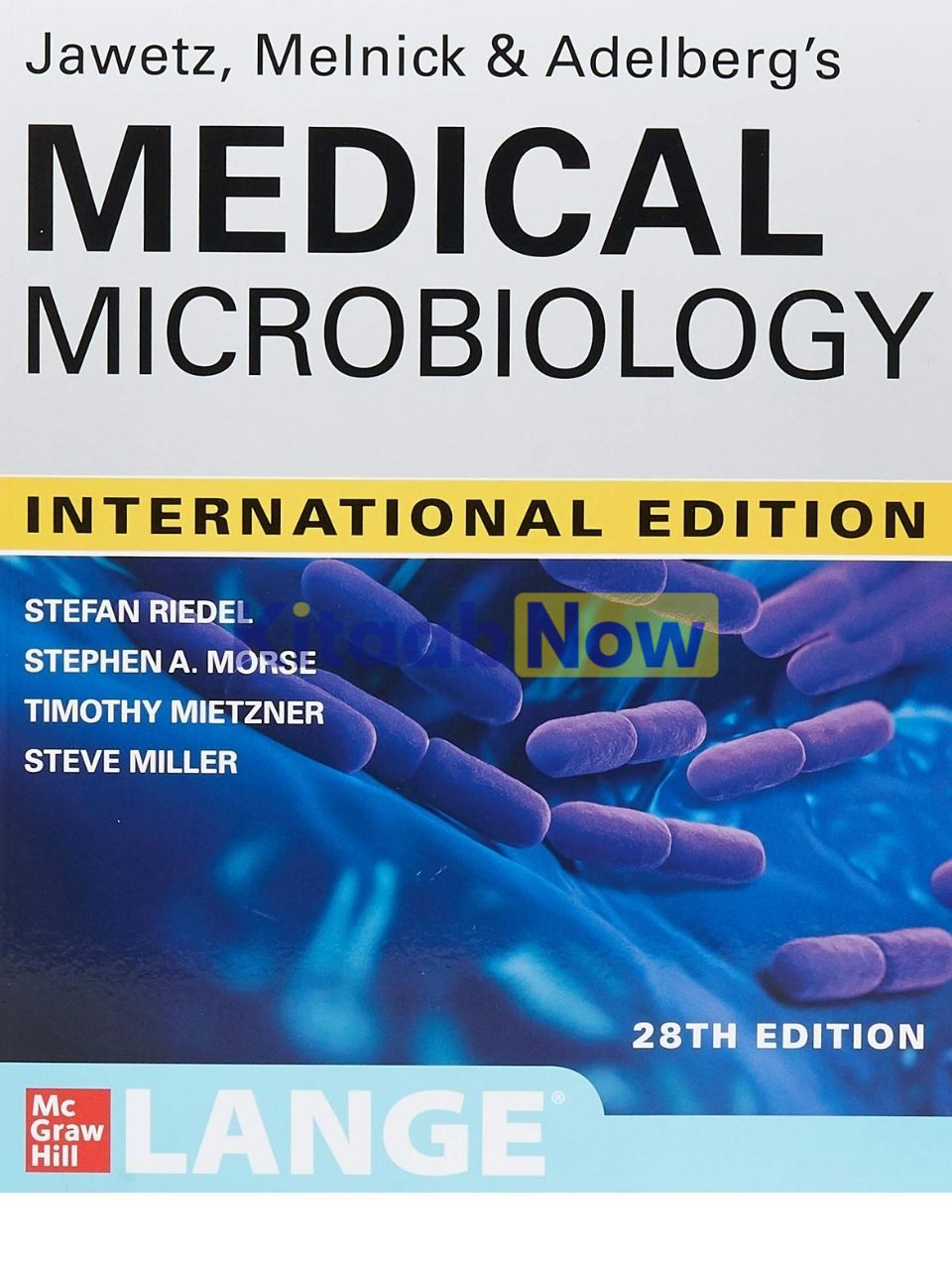
Jawetz, Melnick & Adelberg’s Medical Microbiology (28th Edition)
44% off
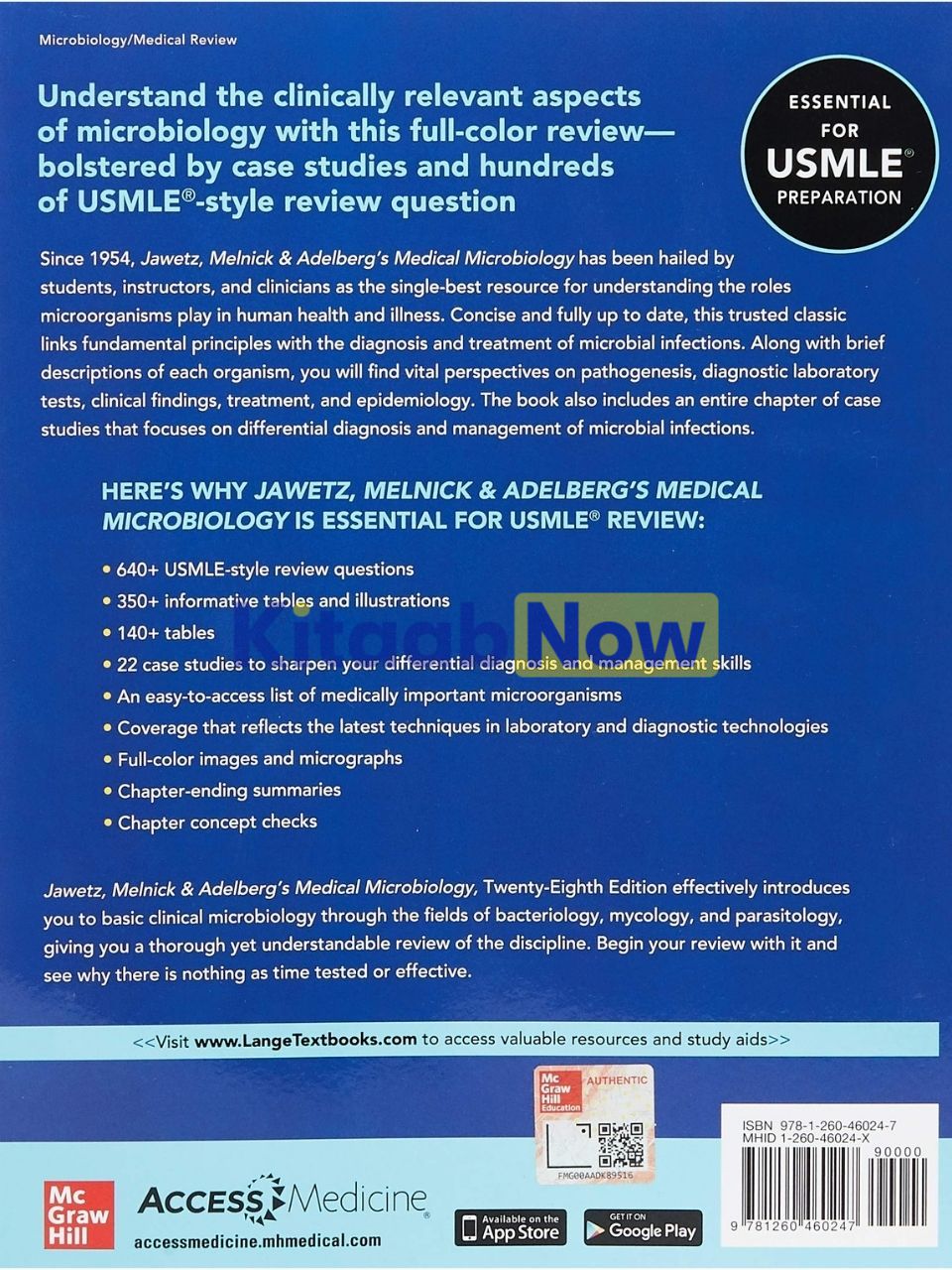
DescriptionUnderstand the clinically relevant aspects of microbiology with this student-acclaimed, full-color review — bolstered by case studies and hundreds of USMLE®-style review questionsA Doody’s Core Title for 2022!Since 1954, Jawetz, Melnick & Adelberg’s Medical Microbiology has been hailed by students, instructors, and clinicians as the single-best resource for understanding the roles microorganisms play in human health and illness.Concise and fully up to date, this trusted classic links fundamental principles with the diagnosis and treatment of microbial infections. Along with brief descriptions of each organism, you will find vital perspectives on pathogenesis, diagnostic laboratory tests, clinical findings, treatment, and epidemiology. The book also includes an entire chapter of case studies that focuses on differential diagnosis and management of microbial infections.Here’s why Jawetz, Melnick & Adelberg’s Medical Microbiology is essential for USMLE® review:640 USMLE-style review questions350 illustrations140 tables22 case studies to sharpen your differential diagnosis and management skillsAn easy-to-access list of medically important microorganismsCoverage that reflects the latest techniques in laboratory and diagnostic technologiesFull-color images and micrographsChapter-ending summariesChapter concept checksJawetz, Melnick & Adelberg’s Medical Microbiology, Twenty-Eighth Edition effectively introduces you to basic clinical microbiology through the fields of bacteriology, mycology, and parasitology, giving you a thorough yet understandable review of the discipline. Begin your review with it and see why there is nothing as time tested or effective.Table of ContentsPrefaceSection I Fundamentals of MicrobiologyChapter 1. The Science of MicrobiologyIntroductionBiologic Principles Illustrated by MicrobiologyVirusesPrionsProkaryotesProtistsChapter SummaryReview QuestionsChapter 2. Cell StructureOptical MethodsEukaryotic Cell StructureProkaryotic Cell StructureStainingMorphologic Changes During GrowthChapter SummaryReview QuestionsChapter 3. Classification of BacteriaTaxonomy—The Vocabulary of Medical MicrobiologyCriteria for Identification of BacteriaClassification SystemsDescription of the Major Categories and Groups of BacteriaNonculture Methods for the Identification of Pathogenic MicroorganismsUpdates to Taxonomic ChangesObjectivesReview QuestionsChapter 4. Growth, Survival, and Death of MicroorganismsSurvival of Microorganisms in the Natural EnvironmentThe Meaning of GrowthExponential GrowthThe Growth Curve in Batch CultureMaintenance of Cells in the Exponential PhaseGrowth in BiofilmsDefinition and Measurement of DeathEnvironmental Control of Microbial GrowthStrategies to Control Bacteria at the Environmental LevelGeneral Mechanisms of Biocide ActionSpecific Actions of Selected BiocidesRelationship of Biocide Concentration and Time on Antimicrobial KillingSummaryKey ConceptsReview QuestionsChapter 5. Cultivation of MicroorganismsRequirements for GrowthSources of Metabolic EnergyNutritionEnvironmental Factors Affecting GrowthCultivation MethodsChapter SummaryReview QuestionsChapter 6. Microbial MetabolismRole of Metabolism in Biosynthesis and GrowthFocal Metabolites and Their InterconversionAssimilatory PathwaysBiosynthetic PathwaysPatterns of Microbial Energy-Yielding MetabolismRegulation of Metabolic PathwaysChapter SummaryReview QuestionsChapter 7. Microbial GeneticsNucleic Acids and Their Organization in Eukaryotic, Prokaryotic, and Viral GenomesReplicationTransfer of DNAMutation and Gene RearrangementGene ExpressionGenetic EngineeringCharacterization of Cloned DNASite-Directed MutagenesisAnalysis of DNA, RNA, or Protein-Expressing ClonesManipulation of Cloned DNAChapter SummaryReview QuestionsSection II ImmunologyChapter 8. ImmunologyOverviewInnate ImmunityAdaptive ImmunityComplementCytokinesMicrobiome and Immune SystemHypersensitivityDefects of the Immune ResponseTumor ImmunologyClinical Immunology Laboratory (Diagnostic Testing)Chapter SummaryReview QuestionsSection III BacteriologyChapter 9. Pathogenesis of Bacterial InfectionIdentifying Bacteria That Cause DiseaseTransmission of InfectionThe Infectious ProcessGenomics and Bacterial PathogenicityRegulation of Bacterial Virulence FactorsBacterial Virulence FactorsThe Damage-Response Framework—A New Paradigm of Microbial Virulence and PathogenicityChapter SummaryReview QuestionsChapter 10. Normal Human MicrobiotaHuman Microbiome ProjectRole of the Resident MicrobiotaNormal Microbiota of the SkinNormal Microbiota of the Mouth and Upper Respiratory TractNormal Microbiota of the UrethraNormal Microbiota of the VaginaNormal Microbiota of the Placenta and UterusNormal Microbiota of the ConjunctivaChapter SummaryReview QuestionsChapter 11. Spore-Forming Gram-Positive Bacilli: Bacillus and Clostridium SpeciesBacillus speciesBacillus anthracisBacillus cereusClostridium speciesClostridium botulinumClostridium tetaniClostridia That Produce Invasive InfectionsClostridium difficile and Diarrheal DiseaseReview QuestionsChapter 12. Aerobic Non–Spore-Forming Gram-Positive Bacilli: Corynebacterium, Listeria, Erysipelothrix, Nocardia, and Related PathogensCorynebacterium diphtheriaeOther Coryneform BacteriaListeria monocytogenesErysipelothrix rhusiopathiaeRhodococcus equiNocardiosisReview QuestionsChapter 13. The StaphylococciChapter SummaryReview QuestionsChapter 14. The Streptococci, Enterococci, and Related GeneraClassification of StreptococciStreptococci, Enterococci, and Related Genera of Particular Medical InterestStreptococcus pyogenesStreptococcus agalactiaeGroups C and GGroup D StreptococciStreptococcus anginosus GroupGroups E, F, G, H, and K–U StreptococciViridans StreptococciNutritionally Variant StreptococciPeptostreptococcus and Related GeneraStreptococcus pneumoniaeEnterococciOther Catalase-Negative Gram-Positive CocciReview QuestionsChapter 15. Enteric Gram-Negative Rods (Enterobacteriaceae)ClassificationDiseases Caused by Enterobacteriaceae Other Than Salmonella and ShigellaThe ShigellaeThe SalmonellaeChapter SummaryReview QuestionsChapter 16. Pseudomonas, Acinetobacter, Burkholderia, and StenotrophomonasThe Pseudomonad GroupPseudomonas aeruginosaBurkholderia pseudomallei and Burkholderia malleiBurkholderia cepacia ComplexStenotrophomonas maltophiliaAcinetobacterChapter SummaryReview QuestionsChapter 17. Vibrio, Aeromonas, Campylobacter, and HelicobacterThe VibriosVibrio choleraeVibrio parahaemolyticus and Vibrio vulnificusAeromonas speciesCampylobacterCampylobacter jejuniHelicobacter pyloriChapter SummaryReview QuestionsChapter 18. Haemophilus, Bordetella, Brucella, and FrancisellaThe Haemophilus speciesHaemophilus influenzaeHaemophilus aegypticusAggregatibacter aphrophilusHaemophilus ducreyiOther Haemophilus SpeciesThe BordetellaeBordetella pertussisBordetella parapertussisBordetella bronchisepticaFrancisella tularensis and TularemiaReview QuestionsChapter 19. Yersinia and PasteurellaYersinia pestis and PlagueYersinia enterocolitica and Yersinia pseudotuberculosisPasteurella multocidaChapter SummaryReview QuestionsChapter 20. The NeisseriaeNeisseria gonorrhoeaeNeisseria meningitidisOther NeisseriaeChapter SummaryReview QuestionsChapter 21. Infections Caused by Anaerobic BacteriaPhysiology and Growth Conditions for AnaerobesAnaerobic Bacteria Found in Human InfectionsBacteria That Cause VaginosisGardnerella vaginalisPathogenesis of Anaerobic InfectionsThe Polymicrobial Nature of Anaerobic InfectionsDiagnosis of Anaerobic InfectionsTreatment of Anaerobic InfectionsChapter SummaryReview QuestionsChapter 22. Legionella, Bartonella, and Unusual Bacterial PathogensLegionella pneumophila and Other LegionellaeBartonellaStreptobacillus moniliformisWhipple DiseaseReview QuestionsChapter 23. MycobacteriaMycobacterium tuberculosisOther MycobacteriumMycobacterium lepraeReview QuestionsChapter 24. Spirochetes: Treponema, Borrelia, and LeptospiraTreponema pallidum and SyphilisBorreliaBorrelia species and Relapsing FeverBorrelia burgdorferi and Lyme DiseaseLeptospira and LeptospirosisChapter SummaryReview QuestionsChapter 25. Mycoplasmas and Cell Wall–Defective BacteriaMycoplasmasMycoplasma pneumoniae and Atypical PneumoniasMycoplasma hominisUreaplasma urealyticumMycoplasma genitaliumChapter SummaryReview QuestionsChapter 26. Rickettsia and Related GeneraGeneralRickettsia and OrientiaEhrlichia and AnaplasmaCoxiella burnetiiReview QuestionsChapter 27. Chlamydia spp.Chlamydia trachomatis Ocular, Genital, and Respiratory InfectionsTrachomaChlamydia trachomatis Genital Infections and Inclusion ConjunctivitisChlamydia trachomatis and Neonatal PneumoniaLymphogranuloma VenereumChlamydia pneumoniae and Respiratory InfectionsChlamydia psittaci and PsittacosisChapter SummaryReview QuestionsChapter 28. Antimicrobial ChemotherapyMechanisms of Action of Antimicrobial DrugsSelective ToxicityInhibition of Cell Wall SynthesisInhibition/Alteration of Cell Membrane FunctionInhibition of Protein SynthesisInhibition of Nucleic Acid SynthesisResistance to Antimicrobial DrugsOrigin of Drug ResistanceCross-ResistanceLimitation of Drug ResistanceClinical Implications of Drug ResistanceAntimicrobial Activity in vitroFactors Affecting Antimicrobial ActivityMeasurement of Antimicrobial ActivityAntimicrobial Activity in vivoDrug–Pathogen RelationshipsHost–Pathogen RelationshipsClinical Use of AntibioticsSelection of AntibioticsDangers of Indiscriminate UseAntimicrobial Drugs Used in CombinationAntimicrobial ChemoprophylaxisAntimicrobial Drugs For Systemic AdministrationPenicillinsCephalosporinsOther β-Lactam DrugsTetracyclinesGlycylcyclinesChloramphenicolMacrolidesClindamycin and LincomycinGlycopeptides, Lipopeptides, LipoglycopeptidesStreptograminsOxazolidinonesBacitracinPolymyxinsAminoglycosidesQuinolonesSulfonamides and TrimethoprimOther Drugs With Specialized UsesDrugs Used Primarily to Treat Mycobacterial InfectionsReview QuestionsSection IV VirologyChapter 29. General Properties of VirusesTerms and Definitions in VirologyEvolutionary Origin of VirusesClassification of VirusesPrinciples of Virus StructureChemical Composition of VirusesCultivation and Detection of VirusesPurification and Identification of VirusesLaboratory SafetyReaction to Physical and Chemical AgentsReplication of Viruses: An OverviewGenetics of Animal VirusesNatural History (Ecology) and Modes of Transmission of VirusesChapter SummaryReview QuestionsChapter 30. Pathogenesis and Control of Viral DiseasesPrinciples of Viral DiseasesPathogenesis of Viral DiseasesPrevention and Treatment of Viral InfectionsChapter SummaryReview QuestionsChapter 31. ParvovirusesProperties of ParvovirusesParvovirus Infections in HumansChapter SummaryReview QuestionsChapter 32. AdenovirusesProperties of AdenovirusesAdenovirus Infections in HumansChapter SummaryReview QuestionsChapter 33. HerpesvirusesProperties of HerpesvirusesHerpesvirus Infections in HumansHerpes Simplex VirusesVaricella-Zoster VirusEpstein-Barr VirusCytomegalovirusHuman Herpesvirus 6Human Herpesvirus 7Human Herpesvirus 8Herpes B VirusChapter SummaryReview QuestionsChapter 34. PoxvirusesProperties of PoxvirusesPoxvirus Infections in Humans: Vaccinia and VariolaMonkeypox InfectionsCowpox InfectionsBuffalopox InfectionsOrf Virus InfectionsMolluscum ContagiosumTanapox and Yaba Monkey Tumor Poxvirus InfectionsChapter SummaryReview QuestionsChapter 35. Hepatitis VirusesProperties of Hepatitis VirusesHepatitis Virus Infections in HumansChapter SummaryReview QuestionsChapter 36. Picornaviruses (Enterovirus and Rhinovirus Groups)Properties of PicornavirusesEnterovirus GroupPoliovirusesCoxsackievirusesOther EnterovirusesEnteroviruses in the EnvironmentRhinovirusesParechovirus GroupFoot-and-Mouth Disease (Aphthovirus of Cattle)Chapter SummaryReview QuestionsChapter 37. Reoviruses, Rotaviruses, and CalicivirusesReoviruses and RotavirusesRotavirusesReovirusesOrbiviruses and ColtivirusesCalicivirusesAstrovirusesChapter SummaryReview QuestionsChapter 38. Arthropod-Borne and Rodent-Borne Viral DiseasesHuman Arbovirus InfectionsTogavirus and Flavivirus EncephalitisYellow Fever VirusDengue VirusBunyavirus Encephalitis VirusesSandfly Fever VirusRift Valley Fever VirusSevere Fever with Thrombocytopenia Syndrome VirusHeartland VirusColorado Tick Fever VirusRodent-Borne Hemorrhagic FeversBunyavirus DiseasesArenavirus DiseasesFilovirus DiseasesChapter SummaryReview QuestionsChapter 39. Orthomyxoviruses (Influenza Viruses)Properties of OrthomyxovirusesInfluenza Virus Infections in HumansChapter SummaryReview QuestionsChapter 40. Paramyxoviruses and Rubella VirusProperties of ParamyxovirusesParainfluenza Virus InfectionsRespiratory Syncytial Virus InfectionsHuman Metapneumovirus InfectionsMumps Virus InfectionsMeasles (Rubeola) Virus InfectionsHendra Virus and Nipah Virus InfectionsRubella (German Measles) Virus InfectionsPostnatal RubellaCongenital Rubella SyndromeChapter SummaryReview QuestionsChapter 41. CoronavirusesProperties of CoronavirusesCoronavirus Infections in HumansChapter SummaryReview QuestionsChapter 42. Rabies, Slow Virus Infections, and Prion DiseasesRabiesBorna DiseaseSlow Virus Infections and Prion DiseasesChapter SummaryReview QuestionsChapter 43. Human Cancer VirusesGeneral Features of Viral CarcinogenesisMolecular Mechanisms of CarcinogenesisInteractions of Tumor Viruses with Their HostsRNA Tumor VirusesHepatitis C VirusRetrovirusesDNA Tumor VirusesHepatitis B VirusPolyomavirusesPapillomavirusesAdenovirusesHerpesvirusesPoxvirusesHow to Prove That a Virus Causes Human CancerChapter SummaryReview QuestionsChapter 44. AIDS and LentivirusesProperties of LentivirusesHIV Infections in HumansChapter SummaryReview QuestionsSection V MycologyChapter 45. Medical MycologyGeneral Properties, Virulence, and Classification of Pathogenic FungiLaboratory Diagnosis of MycosesSuperficial MycosesCutaneous MycosesKey Concepts: Superficial and Cutaneous MycosesSubcutaneous MycosesSporotrichosisChromoblastomycosisPhaeohyphomycosisMycetomaKey Concepts: Subcutaneous MycosesEndemic MycosesCoccidioidomycosisHistoplasmosisBlastomycosisParacoccidioidomycosisKey Concepts: Endemic MycosesOpportunistic MycosesCandidiasisCryptococcosisAspergillosisMucormycosisPneumocystis PneumoniaPenicilliosisOther Opportunistic MycosesEmerging PathogensKey Concepts: Opportunistic MycosesAntifungal ProphylaxisHypersensitivity to FungiMycotoxinsAntifungal ChemotherapiesTopical Antifungal AgentsKey Concepts: Antifungal ChemotherapyReview QuestionsSection VI ParasitologyChapter 46. Medical ParasitologyClassification of ParasitesIntestinal Protozoan InfectionsGiardia lamblia (Intestinal Flagellate)Entamoeba histolytica (Intestinal and Tissue Ameba)Other Intestinal AmebaeCryptosporidium (Intestinal Sporozoa)Cyclospora (Intestinal Sporozoa)Sexually Transmitted Protozoan InfectionTrichomonas vaginalis (Genitourinary Flagellate)Blood and Tissue Protozoan InfectionsBlood FlagellatesTrypanosoma brucei rhodesiense and Trypanosoma brucei gambiense (Blood Flagellates)Trypanosoma cruzi (Blood Flagellate)Leishmania Species (Blood Flagellates)Entamoeba histolytica (Tissue Ameba)—See Intestinal Protozoan Infections SectionNaegleria fowleri, Acanthamoeba castellanii, and Balamuthia mandrillaris (Free-Living Amebae)Plasmodium Species (Blood Sporozoa)Babesia microti (Blood Sporozoa)Toxoplasma gondii (Tissue Sporozoa)MicrosporidiaIntestinal Helminthic InfectionsEnterobius vermicularis (Pinworm—Intestinal Nematode)Trichuris trichiura (Whipworm—Intestinal Nematode)Ascaris lumbricoides (Human Roundworm—Intestinal Nematode)Ancylostoma duodenale and Necator americanus (Human Hookworms—Intestinal Nematode)Strongyloides stercoralis (Human Threadworm—Intestinal and Tissue Nematode)Trichinella spiralis (Intestinal and Tissue Nematode)Fasciolopsis buski (Giant Intestinal Fluke—Intestinal Trematode)Taenia saginata (Beef Tapeworm—Intestinal Cestode) and Taenia solium (Pork Tapeworm—Intestinal and Tissue Cestode)Diphyllobothrium latum (Broad Fish Tapeworm—Intestinal Cestode)Hymenolepis nana (Dwarf Tapeworm—Intestinal Cestode)Dipylidium caninum (Dog Tapeworm—Intestinal Cestode)Blood And Tissue Helminthic InfectionsWuchereria bancrofti, Brugia malayi, and Brugia timori (Lymphatic Filariasis—Tissue Nematodes)Onchocerca volvulus (River Blindness—Tissue Nematode)Dracunculus medinensis (Guinea Worm—Tissue Nematode)Larva migrans (Zoonotic Larval Nematode Infections)Clonorchis Sinensis (Chinese Liver Fluke), Fasciola hepatica (Sheep Liver Fluke), and Paragonimus westermani (Lung Fluke)—Tissue TrematodesSchistosoma mansoni, Schistosoma japonicum, and Schistosoma haematobium (Blood Flukes)Tissue Cestode Infections (Caused by the Larval Stages)Taenia solium—Cysticercosis/NeurocysticercosisEchinococcus granulosus (Hydatid Cyst)Review QuestionsSection VII Diagnostic Medical Microbiology and Clinical CorrelationChapter 47. Principles of Diagnostic Medical MicrobiologyCommunication Between Physician and LaboratoryDiagnosis of Bacterial and Fungal InfectionsThe Importance of Normal Bacterial and Fungal MicrobiotaLaboratory Aids in the Selection of Antimicrobial TherapyDiagnosis of Infection by Anatomic SiteAnaerobic InfectionsDiagnosis of Chlamydial InfectionsDiagnosis of Viral InfectionsReview Questions48. Cases and Clinical CorrelationsCentral Nervous SystemRespiratoryHeartAbdomenUrinary TractBone and Soft TissueSexually Transmitted DiseasesMycobacterium tuberculosis InfectionsMyocobacterium Avium ComplexInfections in Transplant PatientsEmerging InfectionsIndexAuthors BiographyStefan RiedelStephen MorseTimothy MietznerAssociate Professor Department of Microbiology and Molecular Genetics University of Pittsburgh School of Medicine Pittsburgh Adjunct Associate Professor of Microbiology Arizona School of Dentistry and Oral Health Mesa, ArizonaSteve Miller
Related products
37% off

50% off