- Your cart is empty
- Continue Shopping
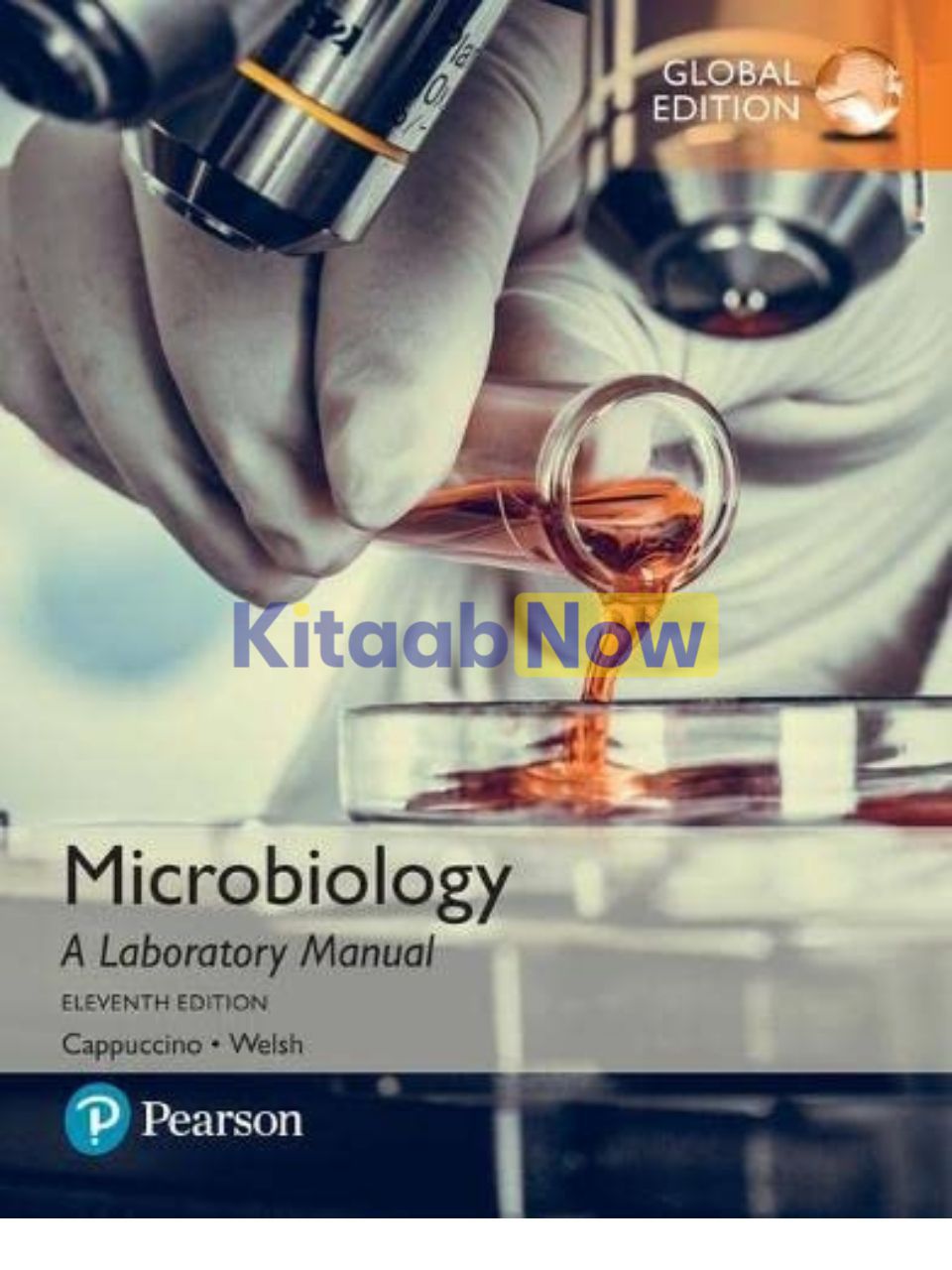
Microbiology: A Laboratory Manual (11th Edition)
44% off
DescriptionFor courses in Microbiology Lab and Nursing and Allied Health Microbiology LabA Flexible Approach to the Modern Microbiology LabEasy to adapt for almost any microbiology lab course, this versatile, comprehensive, and clearly written manual is competitively priced and can be paired with any undergraduate microbiology text. Known for its thorough coverage, straightforward procedures, and minimal equipment requirements, the Eleventh Edition incorporates current safety protocols from governing bodies such as the EPA, ASM, and AOAC. The new edition also includes alternate organisms for experiments for easy customization in Biosafety Level 1 and 2 labs. New lab exercises have been added on Food Safety and revised experiments, and include options for alternate media, making the experiments affordable and accessible to all lab programs. Ample introductory material, engaging clinical applications, and laboratory safety instructions are provided for each experiment along with easy-to-follow procedures and flexible lab reports with review and critical thinking questions.New to this EditionA new experiment on the Propagation of Isolated Bacteriophage Cultures has been added to the Eleventh Edition. This experiment (39) guides students to isolate bacteriophages for genetic manipulation. The genetic manipulation of bacteriophages is an important technique in current clinical research as a possible way to treat antibiotic-resistant bacterial infections.Biosafety Levels (BSLs) have been added to the Eleventh Edition to alert students to appropriate safety techniques. The organisms within this book are mostly BSL-1 with some optional BSL-2 organisms. The Eleventh Edition also reflects the most up to date safety protocols from governing bodies such as the EPA, ASM, and AOAC, better preparing students for professional lab work.Tips for Success appear in select experiments and draw attention to common mistakes and stumbling blocks in the lab. Each tip explains why specific techniques are necessary to yield accurate results, helping guide students on crucial procedural steps and maximizing the available lab media and time.Revised experiments include options for alternate media, making the experiments affordable and accessible to all sizes of lab programs. Experiment 60 has been revised to focus on the normal microbiota of human skin and the importance of hand washing.Easy-to-adapt Lab Reports include blank spaces or options for “alternate organisms” for easy customization with organisms that are readily available.Key FeaturesNEW! A new experiment on the Propagation of Isolated Bacteriophage Cultures has been added to the Eleventh Edition. This experiment (39) guides students to isolate bacteriophages for genetic manipulation. The genetic manipulation of bacteriophages is an important technique in current clinical research as a possible way to treat antibiotic-resistant bacterial infections.NEW! Biosafety Levels (BSLs) have been added to the Eleventh Edition to alert students to appropriate safety techniques. The organisms within this book are mostly BSL-1 with some optional BSL-2 organisms. The Eleventh Edition also reflects the most up to date safety protocols from governing bodies such as the EPA, ASM, and AOAC, better preparing students for professional lab work.NEW! Tips for Success appear in select experiments and draw attention to common mistakes and stumbling blocks in the lab. Each tip explains why specific techniques are necessary to yield accurate results, helping guide students on crucial procedural steps and maximizing the available lab media and time.NEW! Revised experiments include options for alternate media, making the experiments affordable and accessible to all sizes of lab programs. Experiment 60 has been revised to focus on the normal microbiota of human skin and the importance of hand washing.NEW! Easy-to-adapt Lab Reports include blank spaces or options for “alternate organisms” for easy customization with organisms that are readily available.MasteringMicrobiology Lab-specific Assignments are available within each student’s subscription for the Pearson online homework and assessment program. To help students prepare for each class and get the most out of lab time, instructors may assign:Pre-lab quizzes for each of the 72 experiments in the Cappuccino/Welsh Lab Manual; these consist of 10 multiple-choice questions with personalized feedback for wrong answers. Each question includes a Bloom’s taxonomy rating.MicroLab Tutor Coaching Activities combine live-action technique videos and molecular animations, when appropriate, with assessment and answer-specific feedback to coach students in how to correctly perform each lab procedure and interpret/analyze different lab results.Lab Technique Videos give students an opportunity to see techniques performed correctly and quiz themselves on lab procedures both before and after lab time. New Lab Technique videos demonstrate The Scientific Method and How to Write a Lab Report.MicroLab Practical Activities assess students’ ability to interpret and analyze important lab tests, procedures, and results before their Lab Practical.Clinical Applications are integrated into each lab to help students understand why they’re learning each technique and make the connection between lab, lecture, and possible future careers as nurses or in other allied health fields.The comprehensive coverage of core microbiology topics includes experiments in the areas of genetics, immunology, and biotechnology.A wide range of experiments progressing from simple to complex enable instructors to tailor their laboratory classes to the topics they wish to cover.Experiments use the most common and affordable laboratory materials, designed to accommodate any lab.Over 90 photographs in full color and numerous illustrations appear directly alongside the experiments, helping students visualize techniques and expected results.Spiral binding makes student-use easier and minimizes space on a lab bench.“Caution” icons alert users to experiments that pose a potential risk.Six appendices cover the topics of Scientific Notation, Methods for Preparation of Dilutions, Microbiological Media, Biochemical Test Reagents, Staining Reagents, and Experimental Microorganisms.A Guide to Serial Dilutions is printed on the inside back cover for students’ quick reference in completing exercises.Art demonstrating lab procedures appears consistently in a special box design that distinguishes it from other art, and catches the student’s eye.Table of ContentsLaboratory SafetyLaboratory ProtocolPart 1 Basic Laboratory Techniques for Isolation, Cultivation, and Cultural Characterization of MicroorganismsCulture Transfer TechniquesTechniques for Isolation of Pure CulturesCultural Characteristics of MicroorganismsPart 2 MicroscopyMicroscopic Examination of Stained Cell PreparationsMicroscopic Examination of Living Microorganisms Using a Hanging-Drop Preparation or a Wet MountPart 3 Bacterial StainingPreparation of Bacterial SmearsSimple StainingNegative StainingGram StainAcid-Fast StainDifferential Staining for Visualization of Bacterial Cell StructuresPart 4 Cultivation of Microorganisms: Nutritional and Physical Requirements, and Enumeration of Microbial PopulationsNutritional Requirements: Media for the Routine Cultivation of BacteriaUse of Differential, Selective, and Enriched MediaPhysical Factors: TemperaturePhysical Factors: pH of the Extracellular EnvironmentPhysical Factors: Atmospheric Oxygen RequirementsTechniques for the Cultivation of Anaerobic MicroorganismsSerial Dilution—Agar Plate Procedure to Quantitate Viable CellsThe Bacterial Growth CurvePart 5 Biochemical Activities of MicroorganismsExtracellular Enzymatic Activities of MicroorganismsCarbohydrate FermentationTriple Sugar—Iron Agar TestIMViC TestHydrogen Sulfide TestUrease TestLitmus-Milk ReactionsNitrate Reduction TestCatalase TestOxidase TestUtilization of Amino AcidsGenus Identification of Unknown Bacterial CulturesPart 6 The ProtozoaFree-Living ProtozoaParasitic ProtozoaPart 7 The FungiCultivation and Morphology of MoldsYeast Morphology, Cultural Characteristics, and ReproductionIdentification of Unknown FungiPart 8 The VirusesCultivation and Enumeration of BacteriophagesIsolation of Coliphages from Raw SewagePropagation of Isolated Bacteriophage CulturesPart 9 Physical and Chemical Agents for the Control of Microbial GrowthPhysical Agents of Control: Moist HeatPhysical Agents of Control: Electromagnetic RadiationsChemical Agents of Control: Chemotherapeutic AgentsDetermination of Penicillin Activity in the Presence and Absence of PenicillinaseChemical Agents of Control: Disinfectants and AntisepticsPart 10 Microbiology of FoodMicrobiological Analysis of Food Products: Bacterial CountMicrobial FermentationPart 11 Microbiology of WaterStandard Qualitative Analysis of WaterQuantitative Analysis of Water: Membrane Filter MethodPart 12 Microbiology of SoilMicrobial Populations in Soil: EnumerationIsolation of Antibiotic-Producing Microorganisms and Determination of Antimicrobial Spectrum of IsolatesIsolation of Pseudomonas Species by Means of the Enrichment Culture TechniquePart 13 Bacterial GeneticsEnzyme InductionBacterial ConjugationIsolation of a Streptomycin-Resistant MutantThe Ames Test: A Bacterial Test System for Chemical CarcinogenicityPart 14 BiotechnologyBacterial TransformationIsolation of Bacterial PlasmidsRestriction Analysis and Electrophoretic Separation of Bacteriophage Lambda DNAPart 15 Medical MicrobiologyMicrobial Flora of the Mouth: Determination of Susceptibility to Dental CariesNormal Microbial Flora of the Throat and SkinIdentification of Human Staphylococcal PathogensIdentification of Human Streptococcal PathogensIdentification of Streptococcus pneumoniaeIdentification of Enteric Microorganisms Using Computer-Assisted Multitest MicrosystemsIsolation and Presumptive Identification of CampylobacterMicrobiological Analysis of Urine SpecimensMicrobiological Analysis of Blood SpecimensSpecies Identification of Unknown Bacterial CulturesPart 16 ImmunologyPrecipitin Reaction: The Ring TestAgglutination Reaction: The Febrile Antibody TestEnzyme-Linked Immunosorbent AssaySexually Transmitted Diseases: Rapid Immunodiagnostic ProceduresAppendix 1. Scientific NotationAppendix 2. Methods for the Preparation of DilutionsAppendix 3. Microbiological MediaAppendix 4. Biochemical Test ReagentsAppendix 5. Staining ReagentsAppendix 6. Experimental Microorganisms
Related products

37% off
37% off

87% off